The moment The Lost Boys was announced for Broadway, fans of the 1987 cult classic braced for impact. Could a neon-soaked, vampire-biker film translate into a stage musical? Early reviews suggest it’s not only possible—it’s electric, uneven, and at times, thrillingly audacious. Critics have responded with a mix of nostalgic reverence and sharp scrutiny, dissecting everything from the production’s gothic choreography to its tonal tightrope between horror and camp. Here’s what the top theater critics are saying about The Lost Boys on Broadway.
A Musical Bite That Divides the Critics
From opening night, The Lost Boys split critical opinion. Ben Brantley of The New York Times called it “a fever dream of 80s excess—loud, slick, and unapologetically absurd,” while Time Out’s Alexis Soloski awarded it four stars, praising its “dazzling fusion of synth-pop and bloodlust.” Not all were enchanted. The Hollywood Reporter noted the show “struggles to reconcile its horror roots with Broadway’s need for emotional payoff,” suggesting the emotional arcs feel secondary to spectacle.
What unites most reviews is admiration for the show’s ambition. Adapting a film steeped in teen angst, sibling loyalty, and vampire mythology into a two-hour musical demands creative risk. Some critics argue it pays off; others believe it collapses under the weight of its own mythology.
Key points from early reviews:
- Strong visuals and innovative lighting design dominate praise
- Music polarizes—some hail it as “catchy and fresh,” others as “generic pop-rock”
- The balance between horror and humor remains debated
Even detractors concede: The Lost Boys on Broadway is nothing if not memorable.
Staging the Undead: Design and Direction Under the Microscope
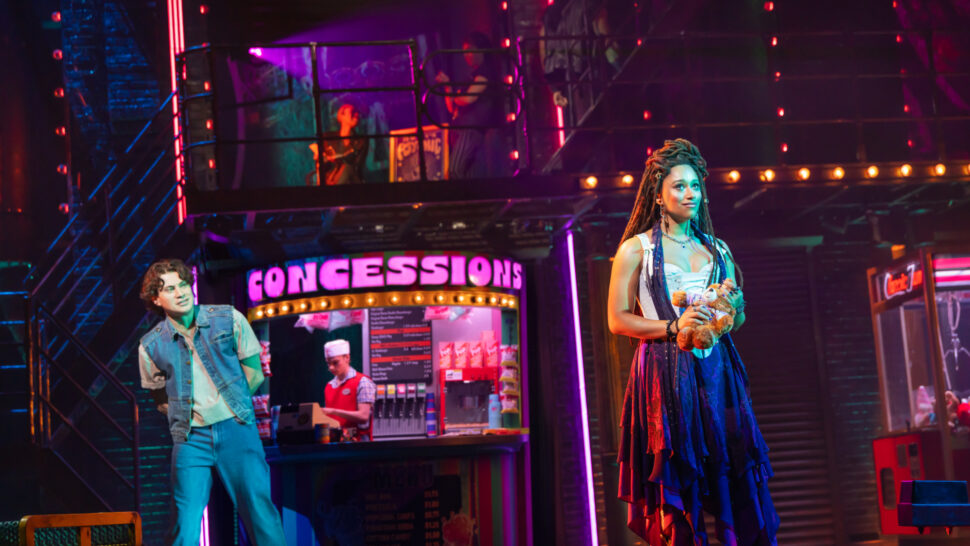
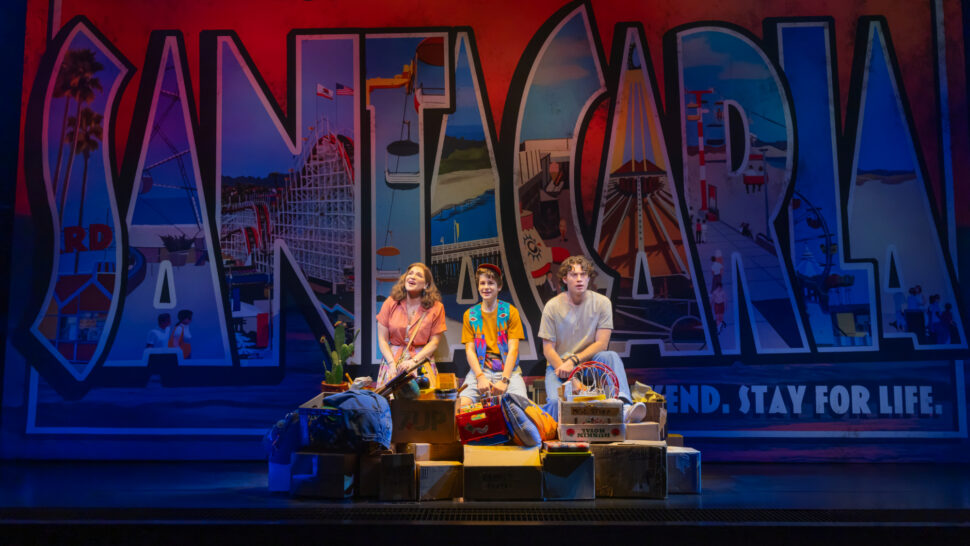
One area where critics largely agree is the production design. The transformation of the Santa Carla boardwalk into a rotating, multi-level stage set has been lauded as “a triumph of theatrical engineering” (The Wrap). Neon lights pulse in rhythm with the score, fog machines flood the aisles, and flying harnesses allow vampires to glide over the audience during pivotal scenes.
Director Rachel Chavkin (Hadestown) brings her signature surreal realism to the staging. Her decision to frame the narrative through Michael’s (the elder Emerson brother) psyche adds psychological depth, but not all critics bought it. Jesse Green of The New York Times questioned whether the “internal monologue device” diluted the story’s momentum, calling it “a narratively cluttered choice.”
Still, choreographer Sonya Tayeh (Moulin Rouge!) earns consistent praise. Her fight sequences blend martial arts, modern dance, and rock choreography—particularly in “Bloodrush,” the show’s breakout number where the vampire gang descends from the rafters mid-dance. As Variety put it: “You’ve never seen balletic bloodsuckers quite like this.”
The Cast: Charisma, Vocal Strength, and a Few Missed Notes
Casting the lead roles of Michael and Sam Emerson proved pivotal. Critics highlight Jaden Michael (Michael) for bringing emotional vulnerability to songs like “Brother, Don’t Fade,” a ballad that anchors the show’s emotional core. His voice—warm but strained during high belts—earned mixed marks.
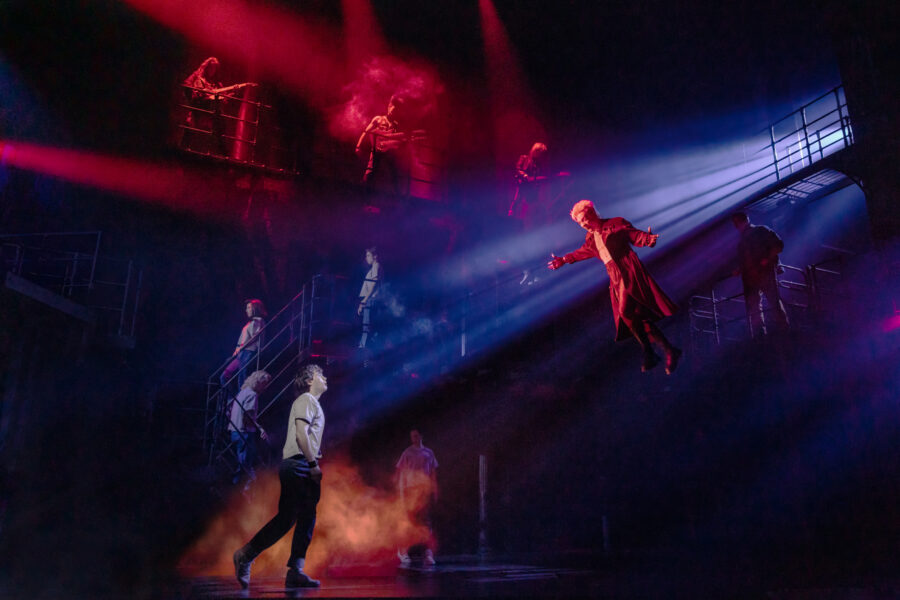
Conversely, Ryan McCartan as David, the charismatic vampire leader, is almost universally praised. His performance channels the original’s Kiefer Sutherland with a theatrical twist, blending menace and magnetism. His rendition of “Fang and Bone” is described by Deadline as “chilling, seductive, and vocally flawless.”
Supporting performances vary. The actors playing the “Lost Boys” (Paul, Dwayne, Marko) are commended for their synchronized physicality, but some critics note their characters lack depth. “They’re more costume than character,” wrote The Guardian, “impressive in unison, forgettable in solo moments.”
Equally controversial: the portrayal of Grandpa (played by veteran character actor Dick Latessa in a pre-recorded hologram format). Some call it “a tech-forward stroke of genius”; others label it “gimmicky and emotionally distancing.”
Music and Lyrics: Does the Soundtrack Sink or Soar?
The score, composed by Duncan Sheik (Spring Awakening) with lyrics by Kyle Jarrow (SpongeBob SquarePants: The Musical), leans heavily into synth-pop and gothic rock. Early singles like “Never Grow Up” and “Bite the Night” have gained traction on streaming platforms, but live, the music divides.
Rolling Stone praised the “dark, pulsing energy” of the score, saying it “elevates the teen angst into full-blown myth.” Yet The Atlantic criticized the lyrics as “on-the-nose,” noting lines like “Our veins run cold, but our hearts still beat” feel more like fan service than poetic storytelling.
One standout: the reimagined version of Echo & the Bunnymen’s “The Killing Moon,” used as the show’s haunting overture. Critics nearly unanimously agree this moment “sets the tone perfectly”—a rare point of consensus.
Still, some reviewers question whether the show leans too heavily on nostalgia. “It’s not clear if we’re watching a reinvention or a remix,” said New York Magazine, capturing a broader sentiment that The Lost Boys sometimes confuses homage with innovation.
Faithfulness vs. Reinvention: What Fans and Critics Want
The central tension in reviews revolves around adaptation philosophy. Should The Lost Boys on Broadway honor the film beat-for-beat, or reimagine it for the stage?
Critics who favor bold reinterpretation praise the show’s third act, which introduces a gender-swapped, punk-rock Star (played by Broadway newcomer Sasha Lane). This version is more assertive, leading a human resistance against the vampires—an addition not in the original film. Entertainment Weekly called it “a necessary evolution,” while purists argue it “betrays the film’s core romance.”
Similarly, the decision to make Max, the vampire-in-chief mall manager, a more tragic, almost sympathetic figure has sparked debate. Some applaud the added moral complexity; others say it undermines his role as a literal and metaphorical sellout.
Where critics converge: the show’s strongest moments occur when it embraces its dual identity—part horror, part high school drama. Scenes where Michael grapples with his changing reflection, or Sam researches vampire lore using vintage comic books, land with emotional authenticity.
Audience Reaction: Standing Ovations vs. Walkouts
Despite mixed reviews, audience response leans positive. Playbill reports 92% audience satisfaction based on post-show surveys, with many praising the “immersive experience” and “surprisingly emotional depth.” Social media buzz centers on moments like David’s aerial entrance and the finale’s pyrotechnic bloodbath.
But reports of mid-show walkouts—particularly during a 12-minute experimental ballet sequence titled “Venom Dreams”—suggest the show doesn’t cater to all tastes. As one Reddit user noted: “I love the film, but 20 minutes of interpretive dance with fangs? That’s a stretch.”
Box office numbers tell their own story. After a slow first week, ticket sales spiked following Ben Platt’s surprise guest appearance in the audience and a viral TikTok of the cast performing “The Killing Moon” in zombie makeup.
The Verdict: A Flawed, But Fearless, Broadway Experiment
The Lost Boys on Broadway isn’t perfect. It stumbles under its own ambition, falters in emotional pacing, and occasionally confuses spectacle for substance. But as critics repeatedly emphasize, it’s undeniably alive—a rare quality in an era of safe adaptations.
The consensus? If you’re seeking a faithful retelling of the 1987 film, this may disappoint. But if you want a bold, genre-bending musical that dares to fuse gothic horror with teenage rebellion, you’ll find much to admire.
As Vulture put it: “It’s not the Lost Boys we remember. It’s the Lost Boys we need—a messy, vital, blood-pumping reminder that Broadway can still bite.”
Final Takeaways for Theatergoers
- See it for: The groundbreaking stage design, Ryan McCartan’s magnetic performance, and the audacious score
- Skip it if: You prefer linear storytelling or are sensitive to strobe lights and loud bass
- Best moment: The act-two climax where the boardwalk transforms into a warzone of light and shadow
- Bring: An open mind, a jacket (the theater blasts AC), and your inner 80s teen
Whether The Lost Boys earns a lasting place in Broadway history remains to be seen. But one thing’s clear: critics agree it’s a show people will talk about—for better or worse.
FAQ
What do most critics say about the music in The Lost Boys on Broadway? Critics are split—some praise its synth-driven energy and emotional range, while others find the lyrics predictable and the melodies forgettable.
Is the show faithful to the original 1987 movie? It follows the core plot but adds new subplots, character twists, and a reimagined ending. Fans of strict fidelity may be disappointed.
Who received the best reviews in the cast? Ryan McCartan, who plays David, is widely praised for his charismatic and vocally strong performance.
Are there horror elements that might disturb sensitive viewers? Yes—the show includes strobe lighting, simulated violence, blood effects, and intense scenes. Not recommended for young children.
How has the audience responded compared to critics? Audiences generally rate it higher than critics, with strong word-of-mouth and social media engagement boosting ticket sales.
Does the show use flying effects? Yes—several actors, especially the vampires, use flying harnesses during key musical numbers.
Is The Lost Boys on Broadway likely to win Tony Awards? It’s a contender in technical categories like Lighting, Sound, and Costume Design, but may face stiff competition in writing and musical categories.
FAQ
What should you look for in What Critics Say About The Lost Boys on Broadway? Focus on relevance, practical value, and how well the solution matches real user intent.
Is What Critics Say About The Lost Boys on Broadway suitable for beginners? That depends on the workflow, but a clear step-by-step approach usually makes it easier to start.
How do you compare options around What Critics Say About The Lost Boys on Broadway? Compare features, trust signals, limitations, pricing, and ease of implementation.
What mistakes should you avoid? Avoid generic choices, weak validation, and decisions based only on marketing claims.
What is the next best step? Shortlist the most relevant options, validate them quickly, and refine from real-world results.